
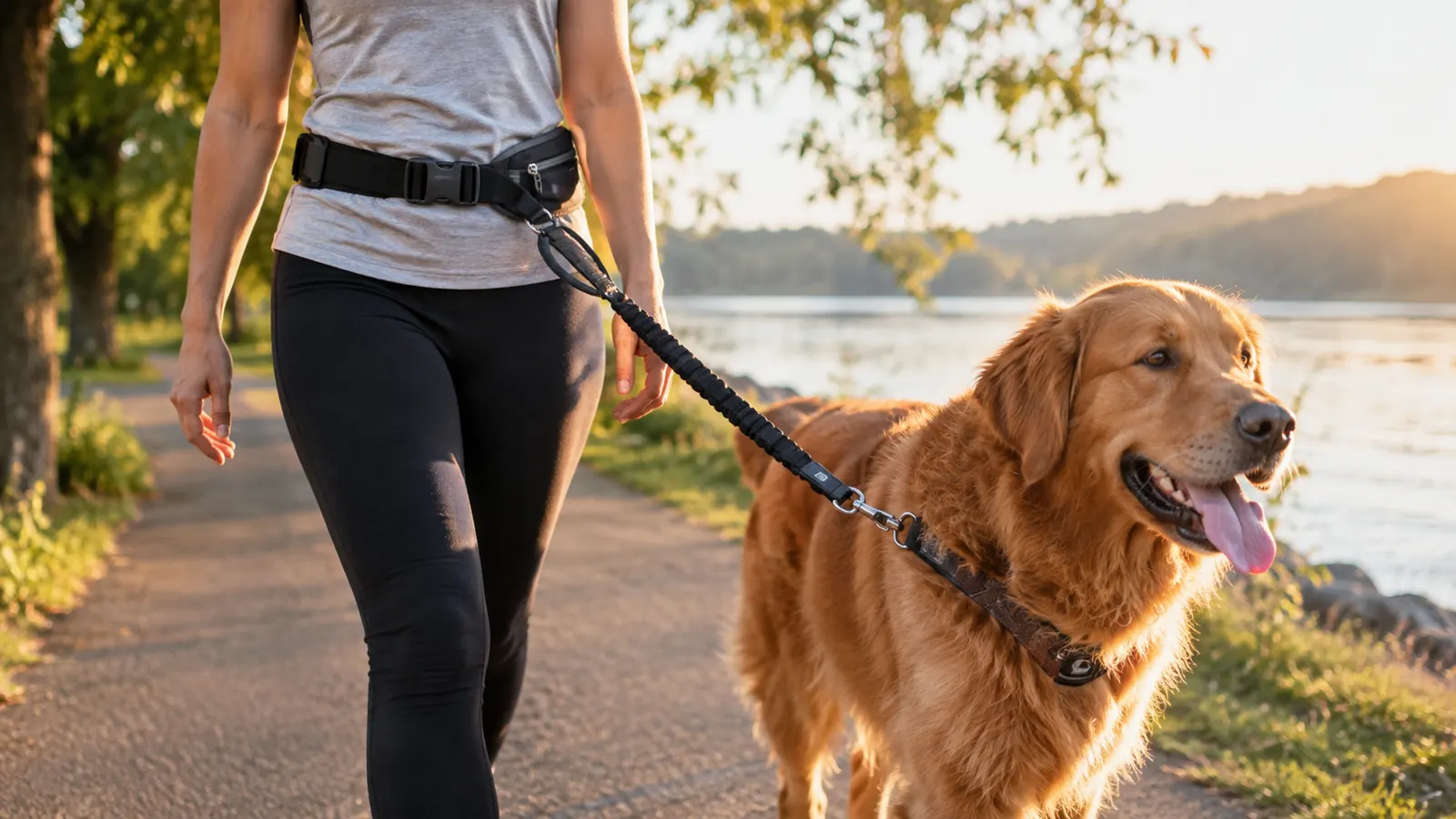
My dog Juniper is 45 pounds of opinions, and most of those opinions involve pulling toward deer, toward other dogs, and toward anything that moves on the river path. I am 61, I have a history of knee trouble, and I walk four to six miles most days because my heart and my sleep are better when I do. For years I held a standard leash in one hand and told myself the shoulder ache was just part of getting older. Then I tried the iYoShop hands-free dog leash, and the first walk felt so different that I kept using it for months to make sure it was not a fluke.
This review covers daily use from late spring through early fall: town paths, easy Cascade trails, and the occasional parking lot where Juniper spotted a deer before I did. I am not a trainer and I am not sponsored. I am a retired school nurse who likes gear that makes a 5 a.m. walk easier, and I kept notes on what worked, what rubbed, and what I would change.
The Quick Verdict
The iYoShop hands-free leash turned my daily walks from a shoulder-aching chore into something I actually look forward to. It is not a training tool, and it will not stop a determined puller by itself, but for a 45-pound dog and a 61-year-old walker it made every single walk more comfortable.
Amazon Check Today's Price →Stop bracing against the leash on every walk
The iYoShop hands-free leash puts the pull in your core instead of your shoulder, and the zipper pouch means your phone and keys are always right there. See today's price on Amazon and read the recent owner notes before you decide.
Amazon Check Today's Price on Amazon →How I've Used It
I clipped the iYoShop leash around my waist over a light jacket most mornings, and over a heavier coat once the weather turned. The belt adjusts, and I found a snug fit just above my hip bones worked best. Juniper walks on my left, the leash runs from the belt to her collar, and my hands stay free for a coffee cup, a poop bag, or the phone I use to take photos of the river.
My typical route is about three miles on the paved path along the Deschutes, with a short hill section that used to make my shoulder complain. On weekends I drive my small SUV to an easy trailhead and we do four to six miles on packed dirt. I also wore the leash for shorter trips: a quick loop around the block, a visit to the vet, and one very embarrassing incident at the farmers market where Juniper tried to greet every single person holding a pastry.
I did not use the leash for training. Juniper knows basic commands, but she still pulls when she sees deer, and I wanted to see how the iYoShop handled that reality rather than how it handled a perfect walk. I also did not use it for running, because I do not run. I walked, I paid attention, and I wrote down what happened.
What the Hands-Free Design Actually Changes
The biggest difference is where the force lands. With a standard leash, every pull from Juniper travels up my arm and into my shoulder, and by the end of a long walk I would catch myself hunching. With the iYoShop leash, the force goes to my hips and core, which are much better equipped to handle it. I stopped bracing, my posture improved, and my shoulder stopped aching after walks.
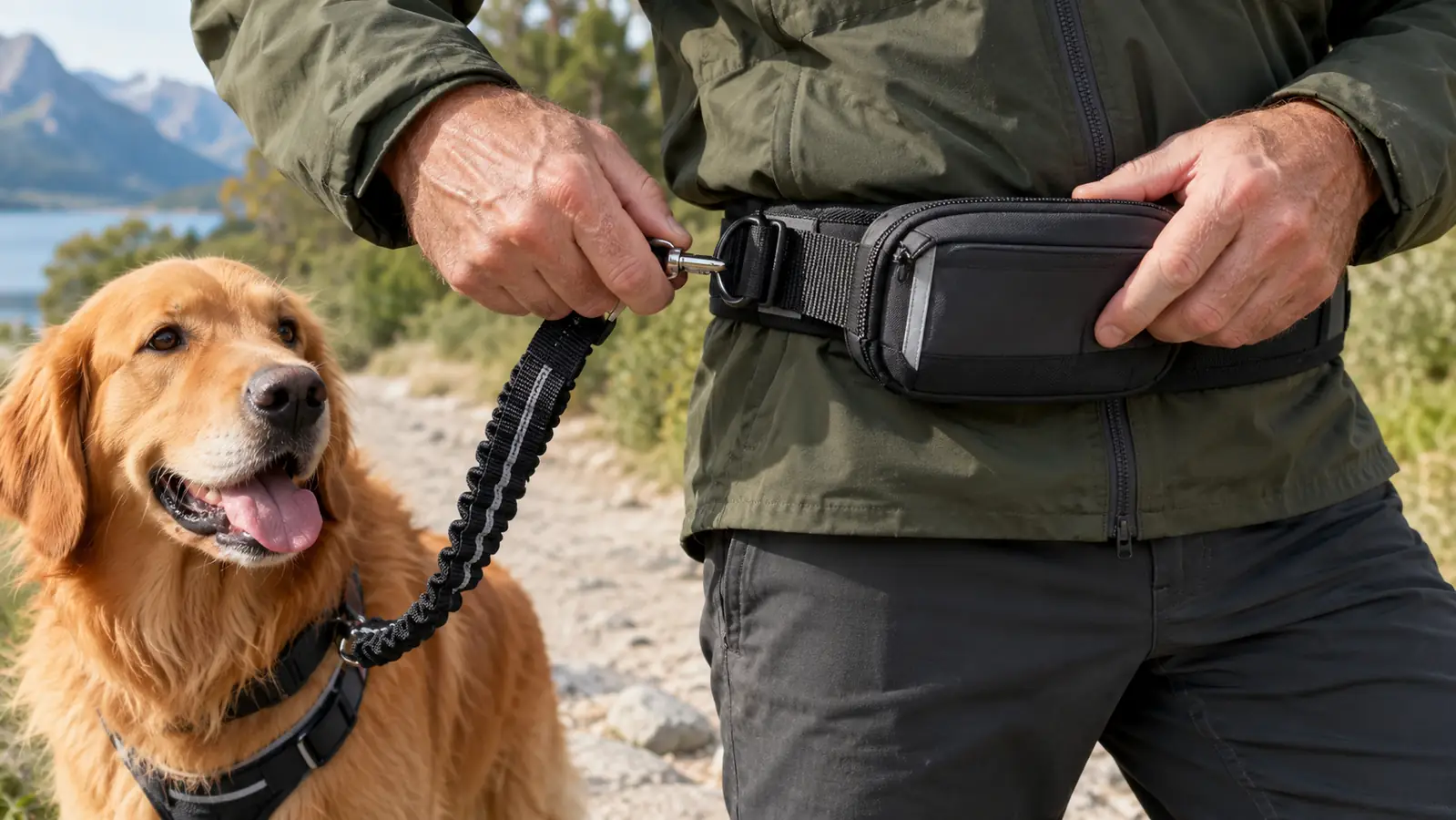
The belt itself is padded and wide enough that it did not dig in, even over a full day of walking. The leash attaches with a clip that I found easy to operate one-handed, which matters when you are holding a leash, a coffee, and a dog who has just spotted a squirrel. The included zipper pouch is small but genuinely useful: I kept my phone, a house key, and a folded poop bag in it, and I never once worried about anything falling out.
There is a second handle on the leash, positioned near the middle, that I used when we crossed a busy street or when Juniper got too interested in a deer. Grabbing that handle gave me a shorter, more controlled hold without unclipping anything. I used it more than I expected, and it is one of the reasons I kept reaching for this leash instead of my old one.
How It Held Up Over Months of Daily Use
I am hard on gear. The leash went through rain, mud, riverbank sand, and one enthusiastic roll in something I did not investigate closely. After about four months, the webbing still looks good, the stitching is intact, and the clip still clicks cleanly. The zipper on the pouch has not snagged, which surprised me, because zippers are usually the first thing to fail on budget gear.
The one wear issue I noticed is on the belt buckle. It is plastic, and after months of daily buckling and unbuckling, it still works fine, but it does not feel as solid as the rest of the leash. I would not be surprised if it wore out before the webbing did. It has not failed yet, and I have not felt the need to replace it, but I am watching it.
The reflective stitching is still reflective, which I checked by accident when a car passed us in the dark and I saw the line light up. I walk early in the morning, and that small detail matters more to me than most of the marketing claims on the package.
The first morning I wore it, I finished three miles and realized my shoulder had not hurt once. That had not happened in years.
Where It Falls Short
The iYoShop hands-free leash is not a magic fix for pulling. Juniper still lunged at deer, and when she did, the force went to my waist instead of my shoulder. That is better, but it is not nothing. If you have a very strong dog, or a dog that pulls hard on every walk, this leash will make the experience more comfortable, but it will not train the behavior. You will still need to do that work separately.
The pouch is small. It fits a phone and a key, but not a phone, a key, and a full-size wallet. I learned to travel light, which is probably good for me, but it is worth knowing before you buy.
I also found that the leash works best when the dog walks on one side consistently. Juniper switches sides constantly, and every time she crossed behind me, the leash wrapped around my legs. It was never dangerous, but it was annoying, and it happened several times per walk until I trained her to stay on my left. If your dog likes to wander, expect a learning curve.
Who This Is For
This leash is for people who walk a lot and want their hands free. It is for the person who is tired of holding a leash in one hand and a coffee in the other, who wants to take photos without dropping the leash, who wants to push a stroller or carry a bag without tangling. It is for walkers with shoulder or wrist trouble who need the force redirected to a stronger part of the body. It is for anyone with a medium dog who pulls occasionally and needs a more comfortable way to manage it.
Who Should Skip It
Skip it if you have a very large, very strong dog that pulls hard on every single walk. The iYoShop leash will not stop that dog, and you will be better served by a training harness and a professional trainer. Skip it if you need a hands-free leash for running, because this is built for walking, not for speed. And skip it if you want a leash that will train your dog not to pull, because no leash does that on its own.
The Parts, One by One
The iYoShop leash comes in three pieces that work together: a padded waist belt with a quick-release buckle, a bungee section in the middle that stretches when the dog pulls, and two handles sewn into the leash itself, one near the belt and one near the clip. The belt adjusts with a simple slider, and once I set it over my jacket in the fall I did not have to touch it again until spring. The buckle is the same style you find on a backpack hip belt. It clicks shut firmly and opens with one squeeze, which matters when you need to free yourself quickly.
The bungee is the part that changes the walk. When Juniper spots a deer and lunges, the stretch takes the first sharp jolt before it reaches my hips. It does not stop her, and it is not meant to. It turns a hard yank into a firm tug I can brace against. For a 45-pound dog that runs warm and gets excited easily, that difference is the reason I could keep walking her at all on the days my shoulder was sore.
The two handles are what I use most, and I did not expect that. The one closest to the clip lets me shorten her right up to my knee when a bike comes past on the river path or when we pass another dog. The one near the belt is where my hand rests the rest of the time. Hands-free does not mean hands-never. It means my hands are free when I want them to be, and available when I need them.
What the Weather Did to It
I walk in every season here, and central Oregon gives you all four in a single week sometimes. The leash went through summer mornings at eighty degrees, a smoky stretch in August, autumn rain on the river path and two snowy mornings in November. The webbing dried overnight every time it got soaked. The stitching on the reflective strip is still intact, and the clip still opens and closes smoothly, which I check by hand every couple of weeks.
The reflective stitching earned its keep in November, when the sun does not come up until after seven and we leave the house in the dark. Cars on the road crossing near our house picked us up in their headlights from a good distance. I still wear a light, but it is reassuring that the leash itself adds to it rather than disappearing into the dark.
The one sign of wear after all those months is that the padding on the belt has flattened a little where it sits on my left hip. It is still comfortable over a jacket. Over a thin summer shirt I noticed the edge a bit more by mile four. That is a small complaint after hundreds of miles, but it is real, and I would rather tell you about it now than have you find it on your own.
How Juniper Took to It
The first week was awkward for both of us. Juniper was used to a regular leash in my hand, and she did not understand why the pressure now came from my hips. She pulled more for the first three or four walks, not less. By the second week she had figured out the new arrangement, and by the end of the first month she was walking at my side more often than not. I credit the training we did together more than the leash, but the leash made that training easier on my shoulder while it happened.
What I Liked
- Waist belt frees both hands for coffee, poles or a water bottle
- Bungee section softens the jolt when a dog lunges
- Two built-in handles for quick control near bikes and other dogs
- Reflective stitching shows up well in headlights on dark mornings
- Webbing dries overnight and held up through rain and snow
Where It Falls Short
- Belt padding flattens a little over months of daily use
- Takes a week or two for a dog to adjust to pressure from the hips
- Not the right tool on ice or steep ground with a strong puller
- The belt edge is noticeable over a thin summer shirt on long walks
If I had to sum up months of daily walks in one line, it would be this: the iYoShop leash did not change my dog, it changed how tired I was when I got home. That turned out to be the thing I needed. On the mornings when my shoulder complained, I still went out, and Juniper still got her miles.
The leash I reach for every single morning
After months of daily use, the iYoShop hands-free leash is still the first thing I grab before a walk. If you walk a lot and your shoulder is tired of doing the work, check today's price on Amazon and read the recent reviews from other daily walkers.
Amazon Check Today's Price on Amazon →