
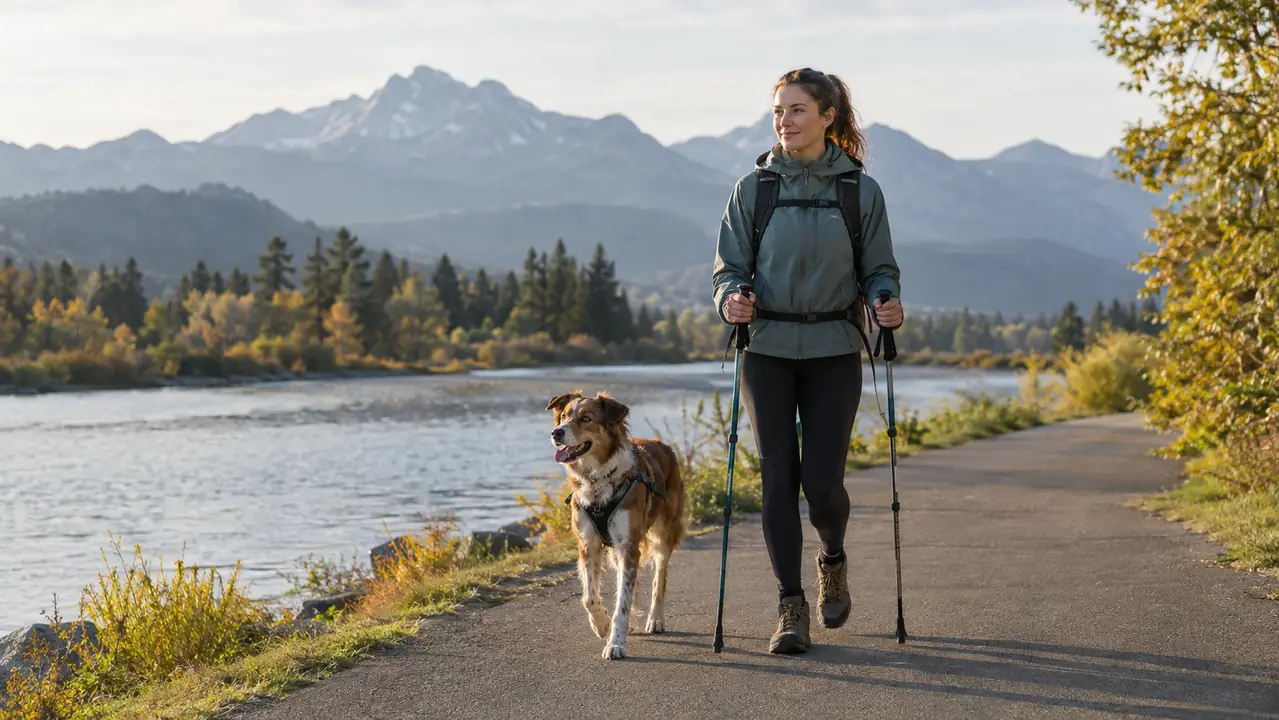
If you had told me last October that a pair of collapsible poles would become the most used piece of walking gear I own, I would have smiled and changed the subject. I'm Odessa Birchfield, 61, a retired school nurse in Bend, Oregon. I walk four to six miles most days, usually along the river path with my dog Juniper, a 7-year-old Australian shepherd mix who treats every deer sighting as a personal emergency. My knees started complaining on the downhill stretches last fall, and my balance on uneven gravel was not what it used to be. So I finally ordered the TrailBuddy trekking poles and kept using them long after a review would have ended. This is what months of daily walks actually taught me.
Before you scroll, one honest note: trekking poles will not fix an injury, and I am not here to promise anyone a pain-free knee. What I can tell you is what changed for me, what did not, and what I wish someone had explained before my first walk with poles.
The Quick Verdict
The TrailBuddy poles are light, easy to adjust, and comfortable enough that I reach for them every morning. They did not cure my knees, but they made the hills easier and the downhill sections steadier. After months of daily use, they are still going strong.
Amazon Check Today's Price →Ready to make your daily walks feel steadier?
The TrailBuddy poles are the ones I kept reaching for. Check today's price on Amazon and see if they fit your routine.
Amazon Check Today's Price on Amazon →How I've Used It
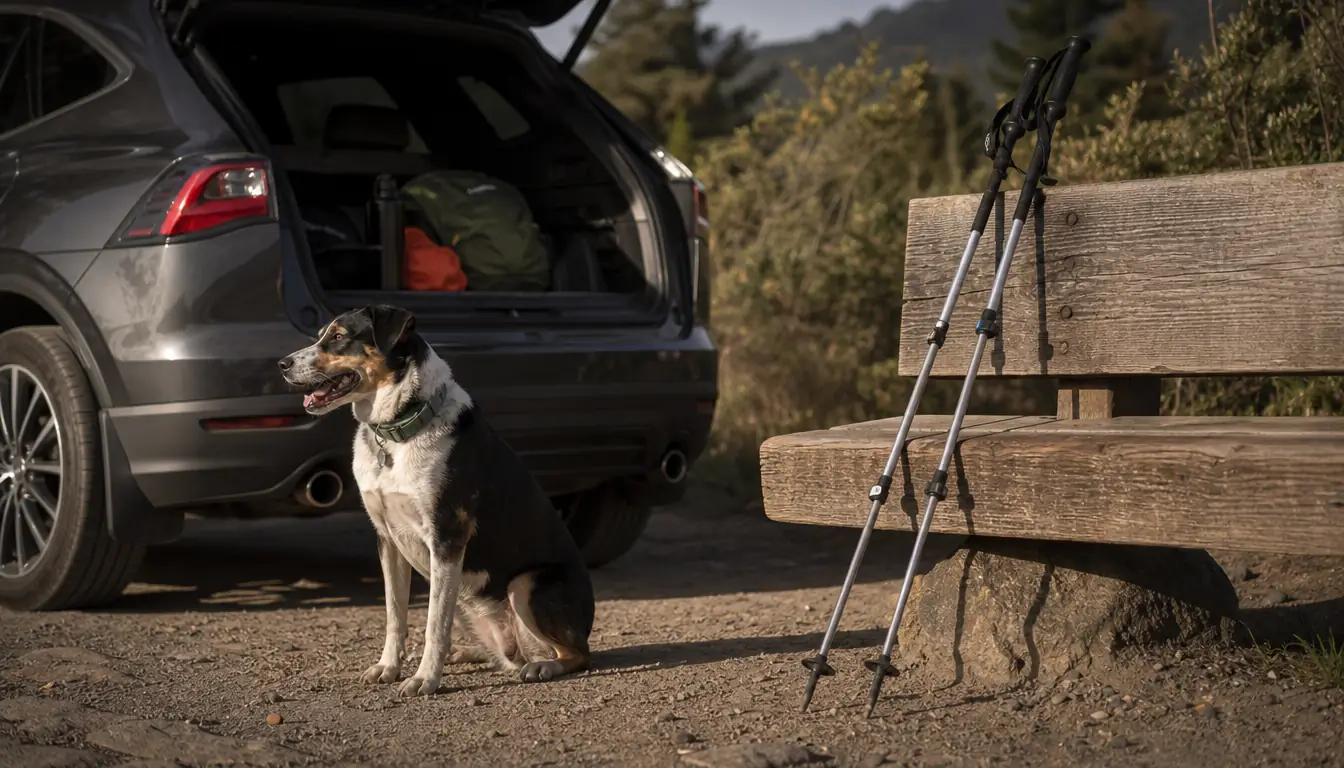
Most mornings I clip Juniper's leash to her harness, fill a water bottle, and head for the river path. It is flat, paved, and shaded, which matters because Juniper runs warm in summer and I am not the kind of walker who enjoys direct sun at 7 a.m. I use the poles on that path three or four days a week. On weekends I drive my small SUV to the trailheads in the Cascade foothills and use them on easy trails with a little elevation. The poles have been in the back of my SUV since the first week, which is probably the best sign of how quickly they became routine.
During the first two weeks I only took them on flat pavement. I wanted to learn the rhythm before I added hills. The poles came already adjusted close to my height, but I spent an evening setting them so my elbows sat at about a right angle when the tips touched the ground. That one adjustment made more difference than anything else. It also taught me that the right height is not the same for every walk. When the path is mostly flat, I set them a little shorter. When I know there is a steady climb, I lengthen them slightly before I leave the car.
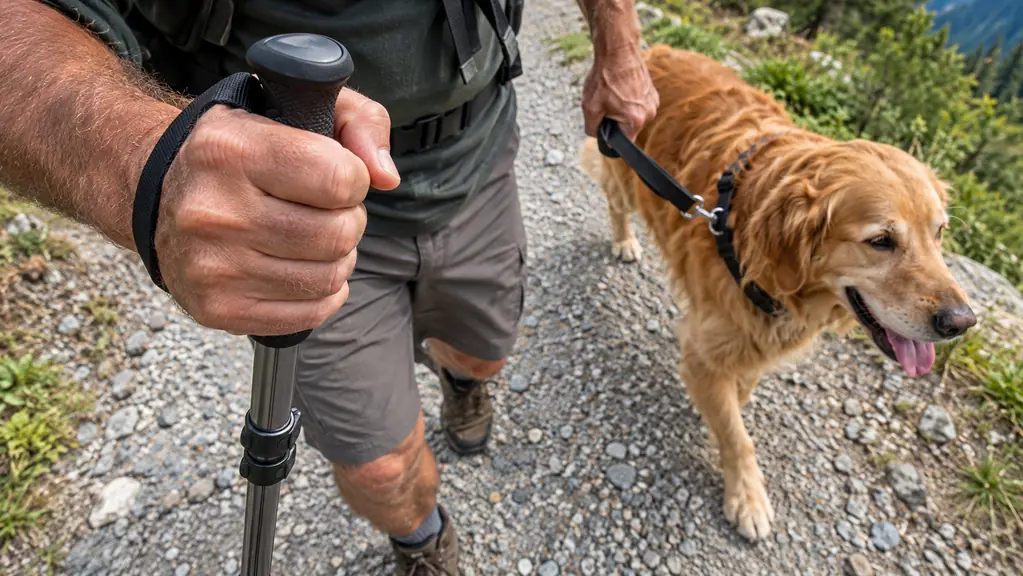
By December I was using them on every walk over two miles. I use the wrist straps more than I expected, push down through the poles on the uphill sections, and let them take some of my weight on the way down. Juniper has learned to give the poles a little space when I plant them, which took about three walks. She used to step over the tips as if they were tree roots. Now she gives them a wide berth without any help from me. It is a small thing, but it made our morning walks feel safer and more relaxed.
I also used them in light rain and on a couple of frosty mornings. The grips stayed grippy when wet, which surprised me, and the aluminum shafts dried off quickly. I did not use them in ice, because I do not trust any pole on black ice, and I would not recommend that to anyone else.
Why I Tried Trekking Poles at 61
I had always thought of trekking poles as gear for serious hikers, people with ultralight backpacks and summit photos. Not for a retired nurse walking a flat river path with a dog who stops to sniff every third bush. But after a few downhill stretches left my knees sore for a full day, I started paying attention to how often I caught myself reaching for a fence or a tree branch on uneven ground. I wanted support on my own terms, not when a handrail happened to be nearby. The TrailBuddy poles were not the first pair I looked at, but they were the ones I kept coming back to because they did not feel like a piece of medical equipment.
Balance was the quieter reason. I do not have a diagnosis, and I am not going to pretend otherwise. But I noticed that when I carried a bottle of water in one hand, I wobbled a little on loose gravel. Walking with two poles gave me four points of contact instead of two. That felt like a small thing in the store and a large thing on a windy day. On the river path, a gust of wind can catch you right as you step over a root. Having a pole planted on each side meant I did not have to think about whether I would catch myself.
What I Learned About the Build
The TrailBuddy poles are made from 7075 aluminum, the same lightweight alloy used in a lot of camping gear. Mine collapse into short sections, so they fit across the back of my small SUV without any fuss. The locking collars have held their setting through months of use, which is the first thing I check on any adjustable pole. I have owned adjustable poles before that slowly slipped, and I have a low tolerance for that particular annoyance.
The grips are the part I did not expect to care about. I have used poles with foam and plastic grips in the past, and after an hour my hands felt hot and slippery. The TrailBuddy grips are cork, and they have a shape that fits my hand without squeezing. On a 90-minute walk in July, my hands stayed dry and I did not get the usual sore spot between my thumb and index finger. That comfort is what made the difference between using the poles occasionally and using them every day.
One detail that surprised me was the wrist straps. I had always treated them as an afterthought and let them dangle. With the TrailBuddy poles, I learned to put my hand up through the strap and press down on the grip. That turned the poles from something I carried into something that carried part of my weight. It took a few days to get the habit, but now I notice the difference on every uphill. The straps also mean I can let go of the poles for a second to pick up the leash without watching them fall to the ground.
On the trailhead, the tips have a hard metal point that bites into gravel and dirt well. On pavement, I use the rubber tips that came with the poles, because the metal tips are loud and they skid on hard surfaces. The rubber tips wore through after a few months, and I bought a spare set. That is normal maintenance, not a complaint. People often assume a pole should last forever without any attention, and this is the one part I expect to replace from time to time.
How They Feel After Months of Walks
I have used the TrailBuddy poles at least five mornings a week since October. That is somewhere north of a hundred walks, on pavement, gravel, damp grass, and a few muddy trails. The poles still lock at the same heights, the grips still look and feel good, and the finish on the shafts has a few honest scratches from being tossed into the back of my small SUV. Nothing has cracked, bent, or come loose. For a piece of gear that gets this much use, that is the compliment that matters most.
On cold mornings the aluminum shafts get cold to the touch, but the grips do not. On hot afternoons the cork does not turn slippery. The wrist straps have stretched a little, which is expected, and I adjusted them once. If I had to name the part most likely to wear out first, it would be the rubber feet, because I use them on pavement constantly. I keep a spare set in the glovebox, so a worn tip is a two-minute fix rather than a reason to skip a walk.
One thing I did not expect was how much the poles helped my dog, indirectly. Because my balance is better, I am not bracing myself every time Juniper lunges toward a deer. I can plant a pole, steady myself, and correct her without losing my footing. That has made our walks calmer for both of us. She still pulls when she sees deer, because she is a 45-pound Australian shepherd mix with strong opinions, but I no longer worry about being yanked off balance on a narrow stretch of trail.
What I'd Change
Nothing about the TrailBuddy poles is perfect, and I would not trust a review that claimed otherwise. The rubber tips wear out with heavy pavement use, and they are the first thing I would buy as a spare. The locking collars need an occasional re-tighten, which takes ten seconds per pole. And if you are the kind of walker who likes to adjust pole height mid-stride, you will need to stop and use both hands to do it. I adjusted mine once and left them alone, so that was never an issue for me, but it is worth knowing before you buy.
The other thing I would tell a friend is to practice at home before the first real walk. Plant the poles, walk a few laps around the kitchen, and get the strap habit down. It sounds silly, but it saved me from feeling clumsy on the river path in front of the whole neighborhood. A little practice also helps you learn how much weight to put through your arms, which is the part that took me the longest to get right.
If I were buying again, I would still choose the TrailBuddy poles, but I would order an extra set of rubber tips at the same time. That way I would not have to remember to pick them up later. It is a small detail, but it is the kind of thing that keeps a good pair of poles in regular use instead of sitting in the garage.
What I Liked
- Lightweight 7075 aluminum shafts are easy to carry and stow in a small SUV
- Cork grips stay comfortable on hot and cold walks
- Locking collars held their setting for months of daily use
- Rubber tips and wrist straps make pavement walking quiet and stable
- Simple to adjust once and leave alone
Where It Falls Short
- Rubber tips wear out with heavy pavement use and need replacing
- Adjusting height mid-walk takes both hands and a stop
- Not a medical device and will not fix an injury
- Aluminum shafts feel cold to the touch in winter
After roughly a hundred walks, the TrailBuddy poles still lock at the same height and the cork grips still feel as good as the day they arrived.
Who This Is For
These poles are for people who walk regularly and want a little more steadiness, whether that means seniors, people with knee complaints, or anyone carrying a phone, a leash, and a water bottle. They are also for people who like the idea of a lightweight pole that disappears into the back of a car. I am not a mountain athlete. I am a retired nurse who walks a river path and an easy trail now and then. If they work for me, they will work for plenty of people in the same boat. That is not a sales pitch. It is just what the last few months have shown me.
One more thing: these are not just for people with sore knees. My walking partner, a neighbor in her sixties, tried them for a week and bought her own pair because she liked how much lighter they felt than the poles she already owned. I am not naming her because she would kill me, but the story is true.
Who Should Skip It
Skip them if you only walk a quarter mile to the mailbox, or if you are looking for a medical device. Trekking poles are not crutches, and they will not fix an injured knee or a balance disorder. I would also skip them if you hate carrying anything in your hands, because you have to want to use them. The poles only help when they are in your hands, not when they are leaning against the door. And if your main walking is on steep, technical mountain routes, you may want a pole with a more specialized locking system and a longer track record in alpine conditions.
The poles I reach for every morning
If you walk a few miles most days and your knees or balance are starting to argue with you, the TrailBuddy poles are worth a look. Check today's price on Amazon and see if they fit your routine.
Amazon Check Today's Price on Amazon →