
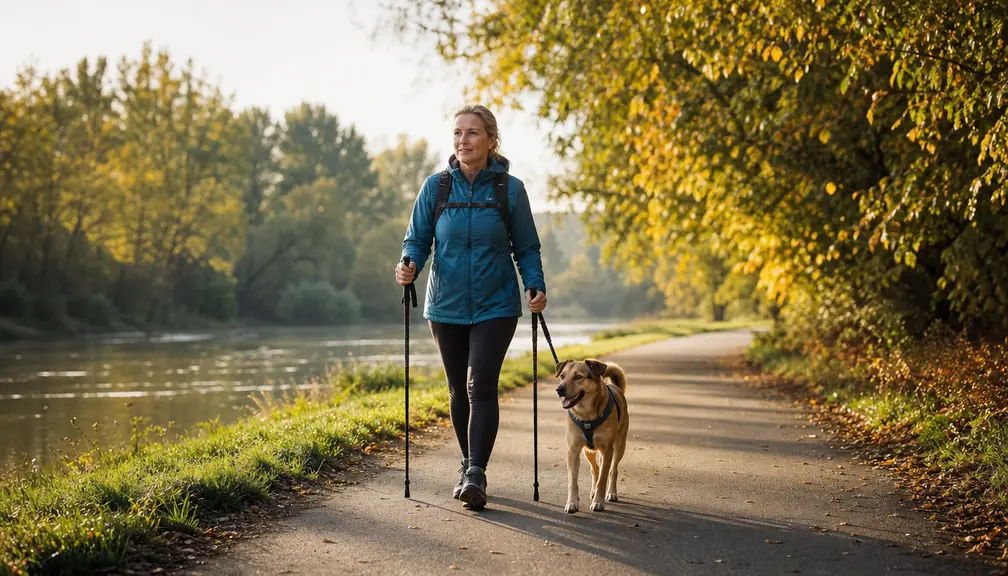
I have walked four to six miles most days for the last three years, and for most of that time I did it without trekking poles. My knees let me know when I skip them. So when I decided to compare TrailBuddy trekking poles against Cascade Mountain Tech, I did it the only way I trust: I used both on the same routes, in the same weather, for months, and I kept notes.
The short answer is that TrailBuddy is the better everyday pole for most people, especially if you walk on pavement, gravel, and easy dirt paths. Cascade Mountain Tech is lighter and has a nicer cork grip, but the locking system gave me trouble, and the smaller basket made the pole less useful on soft ground. Here is the full breakdown.
| TrailBuddy | Cascade Mountain Tech | |
|---|---|---|
| Weight | About 10.5 oz per pole, solid but not heavy | About 8.5 oz per pole, noticeably lighter |
| Grip | Cork grip with a smooth transition, comfortable in warm weather | Cork grip, slightly softer feel |
| Locking system | Twist lock that held firm through months of daily use | Twist lock that slipped a few times on rocky descents |
| Baskets | Interchangeable baskets, larger basket handles soft ground well | Smaller fixed basket, fine on hard paths, less useful off trail |
| Wrist straps | Padded straps that stayed put and did not chafe | Thinner straps, still comfortable on short walks |
| Best for | Everyday walks on mixed surfaces, seniors, people who want a dependable pole | Ultralight hikers who want the lightest pole and mostly stay on hard trails |
Where TrailBuddy Wins
The locking system is the reason I reach for TrailBuddy most mornings. Both poles use a twist lock, but the TrailBuddy lock held firm every single time. I set it once, and it stayed. On a rocky descent near the Deschutes River, I put real weight on the pole and it did not collapse. That is the whole job of a trekking pole, and TrailBuddy does it without drama.
The baskets matter more than I expected. TrailBuddy includes interchangeable baskets, and the larger one made a real difference on the soft dirt and pine needle sections of my weekend trails. The pole did not sink into the ground the way the Cascade pole did. For a person my age, a pole that sinks at the wrong moment is a fall waiting to happen. I will take a few extra ounces for that kind of dependability.
Where Cascade Mountain Tech Wins
I will be honest: Cascade Mountain Tech is the lighter pole, and on a long day you can feel it. At about 8.5 ounces per pole, it is easier to carry when you are just holding the poles in one hand while you stop to look at the river. The cork grip is also slightly softer, which is pleasant on a warm afternoon when my hands get sweaty.
But lighter is not always better. The Cascade pole slipped on me three times over the course of a month, always on uneven ground when I needed it most. The smaller basket also meant the pole pushed deeper into soft soil. If you walk only on paved paths and hard-packed gravel, Cascade Mountain Tech is a fine choice. For the mixed surfaces I walk most days, I would rather have the TrailBuddy.
The pole that held firm on every single walk
After months of side by side use, TrailBuddy is the pair I keep by the door. Dependable locks, comfortable cork grips, and baskets that work on pavement and soft trail alike.
Amazon Check Today's Price on Amazon →Who Should Buy Which
Buy the TrailBuddy poles if you walk most days on a mix of surfaces, if you are a senior who wants a pole you can trust on uneven ground, or if you are new to trekking poles and want something forgiving. The twist lock is easy to use, the straps are padded, and the larger basket keeps the pole from sinking. That combination is what made my morning walks feel steadier within the first week.
Buy the Cascade Mountain Tech poles if you are an ultralight hiker who counts every ounce and you mostly stay on hard packed trails. The weight savings are real, and the grip is lovely. Just know that the locking system may need more attention, and the smaller basket is not ideal for soft ground. For my kind of walking, the tradeoff is not worth it.
How I Tested Both Pairs
I did not want this to be a spec sheet comparison, so I set up a simple routine and stuck to it. For six weeks I alternated the two pairs by day of the week. TrailBuddy went out on Monday, Wednesday and Friday, Cascade Mountain Tech on Tuesday, Thursday and Saturday, and Sunday was whichever pair was already sitting by the back door. Both went on the same three routes: the paved river path through town, a packed gravel loop at the edge of the pines, and a rougher trail on the weekend with roots, loose cinder and one steep pitch down to a creek crossing.
Juniper came on every one of those walks, which matters more than it sounds. A dog on a waist leash changes how you use poles, because every so often she stops dead to smell something and you have to plant both poles and stop with her. A pole that feels fine when you are walking alone at a steady pace can feel very different when you are stopping and starting forty times a mile. I paid attention to that more than to anything printed on the box.
I also kept a short note on my phone after every walk. Nothing fancy, just three lines: did either pole slip, how did my hands feel, and was there anything that annoyed me. By the end I had about forty entries, and reading them back was more honest than my memory would have been. My memory wanted to like whichever pair I had used most recently. The notes did not care.
The Locks, Day After Day
The single biggest difference for me was the locking system. The TrailBuddy poles use flip levers that you open, slide to your height, and snap shut. Once I found my number on the printed scale, I set them and more or less forgot about them. In six weeks I had to retighten one lever once, after a cold morning when I think the aluminum contracted a little. The adjustment screw on the lever takes a coin or a thumbnail and about five seconds.
The Cascade Mountain Tech pair I tested also has lever locks, and they are good, but on my pair the levers needed a firmer squeeze to close fully. Twice I thought a lever was shut when it was not quite seated, and the pole slid down an inch or two the first time I leaned on it going downhill. Nobody fell, but it got my attention. With a dog clipped to my waist, the last thing I want is a pole that changes length when I put weight on it. I will say plainly that this might be my particular pair. It is still what happened.
If you have arthritis in your hands or weaker grip strength, test the levers in the store or right when the box arrives. Close each one, then lean your full weight on the pole on a hard floor. If it holds, you are fine. If it slips, tighten the tension screw a quarter turn and try again. That test takes one minute and it is the most useful minute you will spend with either pair.

Grips, Straps and Cold Mornings
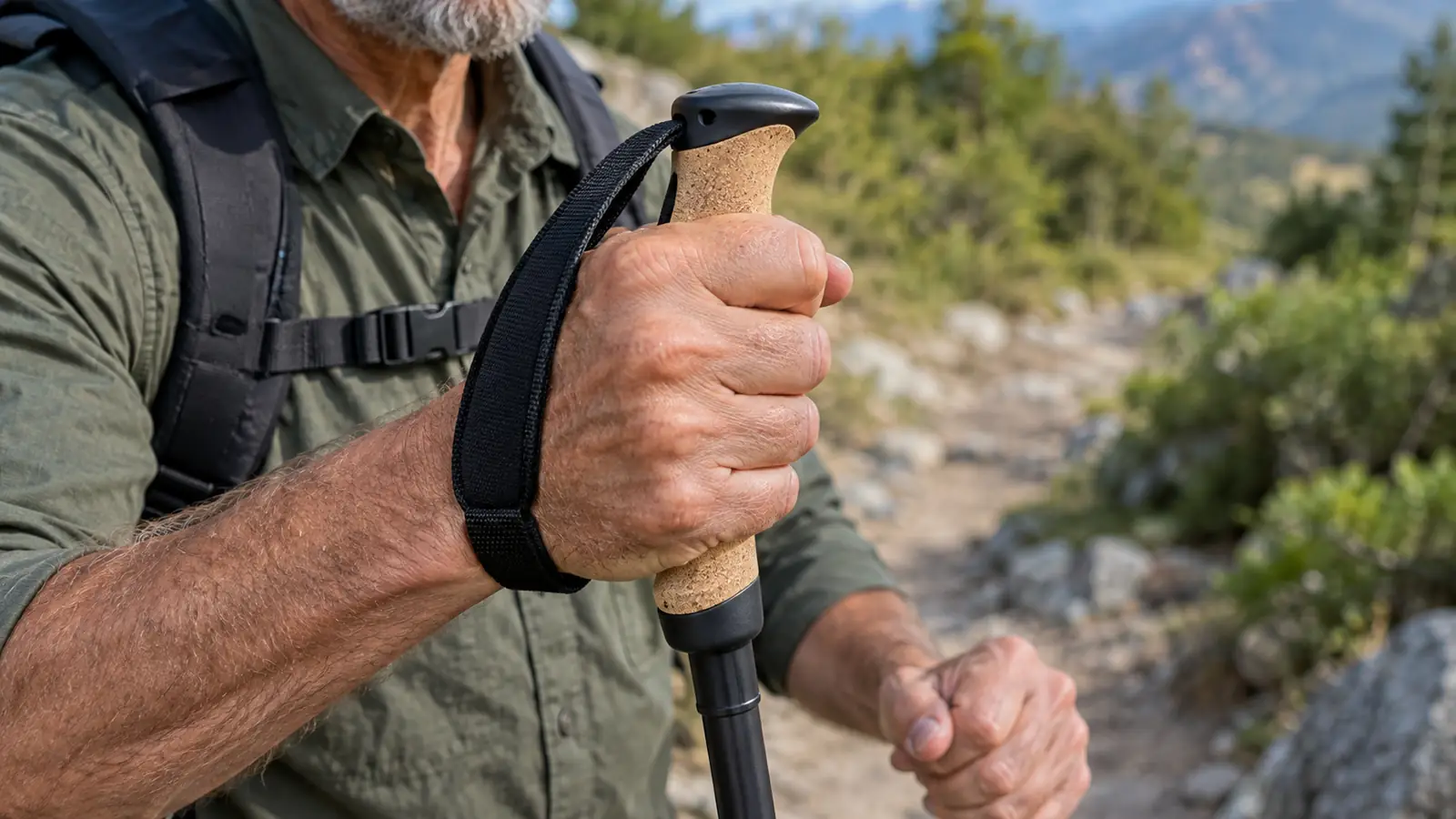
Both pairs come with cork grips, and both felt pleasant for the first mile. Where they parted ways was in the straps and in how my hands felt after an hour. The TrailBuddy straps are padded and wide enough that I could rest the heel of my hand in them on long flat stretches and barely grip the cork at all. That is how you are supposed to use a pole strap, and it took real pressure off my fingers on the longer Saturday walks.
The Cascade straps were a little narrower and the edge rubbed the back of my right wrist on a humid August morning. A thin sweatband fixed it, but I should not have needed one. In October, with frost on the river path and my fingers stiff, I noticed the cork on both pairs stayed warmer than the foam I have used on cheaper poles. That is a point for both of them, and a reason I would not buy a pole with bare plastic grips again.
Weight, Packing and the Car
I drive a small SUV to the trailheads, and poles that do not collapse short enough end up rattling around the back. Both pairs collapse to roughly the same length, and both fit across the cargo floor without angling. The TrailBuddy pair felt a touch lighter when I carried both poles in one hand while Juniper drank at the creek, though the difference is small enough that I would not choose on weight alone.
Both come with rubber tips for pavement and carbide tips underneath for dirt and gravel. I used the rubber tips on the river path every weekday and swapped them off on weekends. After six weeks the TrailBuddy rubber tips showed even wear and the Cascade tips had worn a little flat on one side, probably from my own walking angle. Spare tips are cheap for both brands and worth buying the day you buy the poles.
What Six Weeks of Notes Added Up To
When I read back through my phone notes, the pattern was clear. On TrailBuddy days the most common entry was some version of nothing to report. On Cascade days I had more small complaints: the lever that did not seat, the strap rub, one morning where I had to stop and readjust height. None of those are disasters. They are the small frictions that decide whether you grab your poles on a gray Tuesday or leave them by the door.
That is really the whole test for an everyday walker. The best pair is the pair you forget you are using. For me, that was the TrailBuddy pair, by a margin that was small on paper and bigger in daily life. If you already own a Cascade pair that works for you, there is no reason to replace it. If you are buying your first pair for daily walks, the TrailBuddy is the one I would put in your hands.
Setting the Height the First Time
Whichever pair you buy, spend ten minutes setting them up properly before the first walk. Stand on a flat floor in the shoes you walk in, hold a pole by the grip with the tip next to your toe, and adjust until your elbow sits at roughly a right angle. Note the number on the printed scale, then set the second pole to the same number. On the TrailBuddy poles the scale is easy to read, and I wrote my number on a strip of tape inside the car door so I never have to guess. For long descents I lengthen them about two inches, and for climbs I shorten them about the same.
It is a small step that people skip, and it explains a lot of the complaints you read about poles feeling awkward. A pole set too long pushes your shoulders up toward your ears, and one set too short makes you hunch. Get the height right first, and both of these pairs will feel far better than they would straight out of the box.
Start tomorrow's walk with a steadier stride
TrailBuddy trekking poles are the pair I trust for everyday walks. See today's price on Amazon and decide for yourself.
Amazon Check Today's Price on Amazon →