
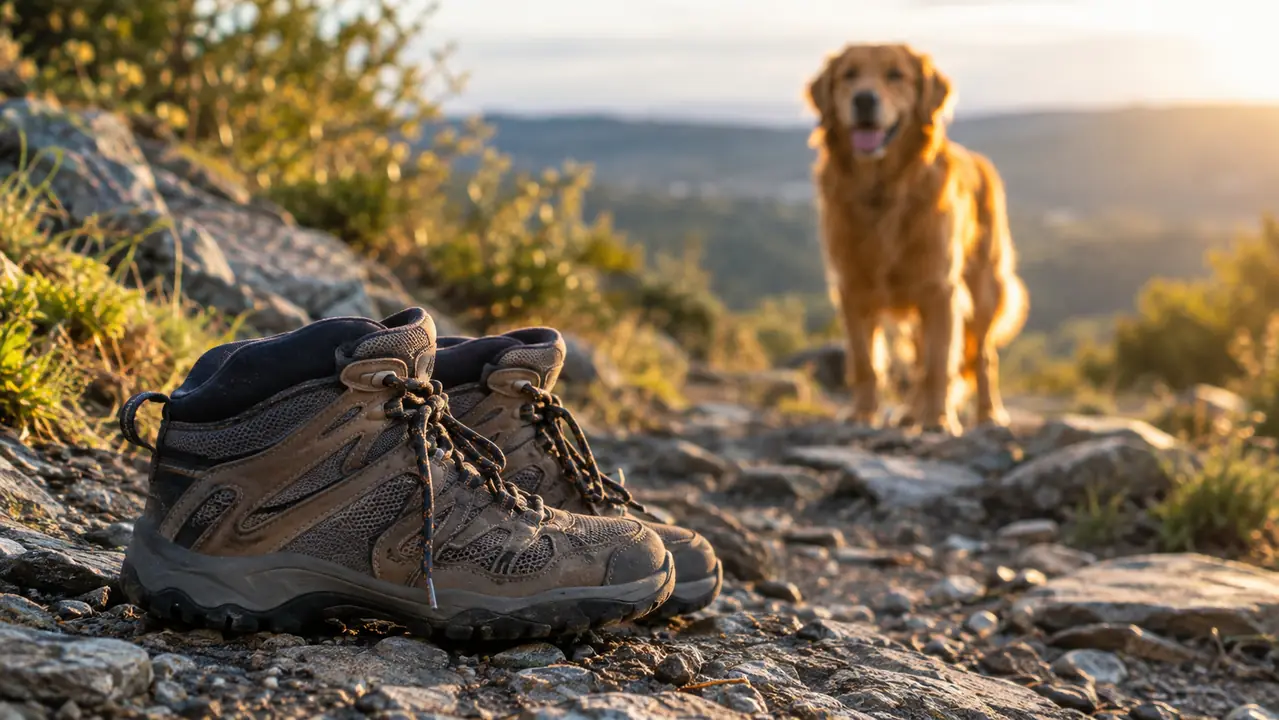
I have walked four to six miles most days for the past three years, and I have learned to read a hiking shoe the way I used to read a fever chart. The Merrell Moab 3 is the shoe I kept coming back to, and also the shoe I almost gave up on twice. That is the honest part nobody puts in the marketing. Let me tell you what actually happened.
My name is Odessa Birchfield. I am 61, I live in Bend, Oregon, and my walking partner is Juniper, a 7-year-old Australian shepherd mix who does not care about my knees, my sleep, or my heart rate. She cares about the trailhead. So I walk, most days, on the river paths in town and on the easy Cascade trails on weekends. I bought the Merrell Moab 3 expecting a comfortable, dependable shoe. What I got was more complicated than that, and more useful.
The Quick Verdict
The Merrell Moab 3 is a genuinely comfortable, durable hiking shoe that handles everyday miles and easy trails with ease, but it runs warm, needs a real break-in, and the waterproof version is not as breathable as the name suggests.
Amazon Check Today's Price →If you want a hiking shoe that handles daily miles without complaint, the Merrell Moab 3 is worth a serious look.
I have put hundreds of miles on mine. It is comfortable, stable, and dependable, and it has held up better than shoes that cost more. Check today's price on Amazon and see if it fits your feet as well as it fit mine.
Amazon Check Today's Price on Amazon →How I've Used It
I have owned my Merrell Moab 3 for about eight months. In that time I have worn them on river path walks, on gravel trails, on muddy spring sections of the Deschutes, on dry summer singletrack, and on one memorable October morning when the trail was more creek than trail. I have also worn them to the grocery store, to the post office, and to pick up Juniper's food, because they are the shoes I reach for when I do not want to think about my feet.
My typical week is four or five walks of three to five miles on town paths, plus a longer weekend hike of six to eight miles when the weather cooperates. That is not extreme use. It is exactly the kind of use most people give a hiking shoe, which is why I think my experience is worth sharing. I am not a thru-hiker. I am a retired school nurse who wants her feet to stop complaining.
The first thing I noticed was the fit. The Moab 3 has a roomy toe box, which I need because my toes spread when I walk downhill. The heel holds snugly, and the arch support is noticeable without being aggressive. I have flat-ish feet and mild bunions, and I did not have to add my usual aftermarket insoles. That alone put this shoe ahead of most I have tried.
What Nobody Tells You About the Break-In
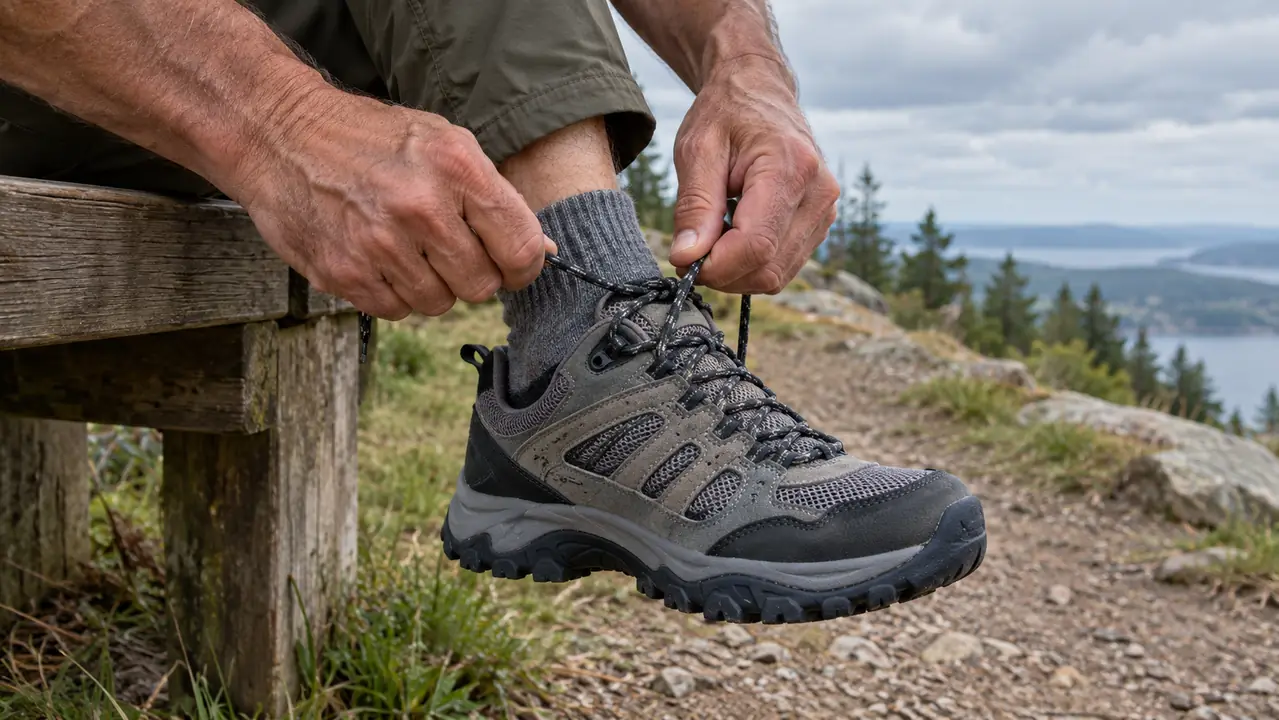
Here is the part the reviews skip. The Merrell Moab 3 needs a real break-in. The first week, I got hot spots on the backs of my heels. Not blisters, but the kind of rub that makes you think about your feet with every step. I almost returned them. I am glad I did not, because after about ten miles they settled in and became some of the most comfortable shoes I own.
The break-in is not dramatic. It is not the stiff, painful process you get with some leather boots. It is more that the collar and the tongue need to soften and mold to your foot. If you buy these for a big trip, wear them around the house and on short walks for a week first. Do not do what I did and take them straight out for a six-mile hike. Your heels will remind you.
I want to be specific about that first week, because the details are what the glossy reviews leave out. I bought the shoes on a Tuesday in early March and wore them the next morning for a four-mile loop along the Deschutes. By mile two, I could feel the collar rubbing the back of my left heel with every stride. By mile three, the right foot joined in. I came home, peeled off my socks, and found two red patches, each about the size of a quarter, with no broken skin. I nearly put the shoes back in the box that afternoon. Instead, I wore them around the house for two evenings, then did two short two-mile walks, then a three-mile walk with thicker socks. Somewhere around the ten-mile mark, the rubbing stopped. I have not thought about my heels since, and that is the real story of the break-in: it is short, it is real, and it ends.
The first week, I got hot spots on the backs of my heels. Not blisters, but the kind of rub that makes you think about your feet with every step.
The Waterproof Question Nobody Answers Honestly
I bought the waterproof version because I walk in the Pacific Northwest, where rain is a personality trait. The Merrell Moab 3 waterproof membrane does keep my feet dry in puddles, light rain, and wet grass. I have stepped in shallow creek crossings and come out with dry socks. That part is real.
What nobody tells you is that waterproof means warm. On summer mornings, even at 7 AM, my feet got hot in these shoes. Not sweaty enough to blister, but warm enough that I noticed. If you walk in a warm climate, or if your feet run hot like mine do, consider the non-waterproof version. It breathes better and dries faster, and for most town path walking you do not need the membrane.
I also learned that waterproof shoes take longer to dry once they get wet from the inside. The one time I walked through a section of trail that was deeper than my shoes, they stayed damp for two days. A non-waterproof shoe would have dried overnight. That is a tradeoff, not a flaw, but it is a tradeoff the marketing does not mention.
Let me give you the exact numbers from that wet day, because this is the kind of thing you only learn by living it. It was a Saturday in late April, and Juniper and I took the trail along the Deschutes after three days of rain. The path was fine for the first mile and a half, then the river had come up over a low section and I stepped into water that came over the top of my shoes. My socks were soaked within seconds. I wrung them out, finished the walk, and hung the shoes in the mudroom that afternoon. They were still damp on the inside Sunday evening. By Monday morning they were dry enough to wear, but barely. The membrane that keeps water out also keeps it in, and that is the honest tradeoff. If I lived somewhere drier, I would own the non-waterproof version without a second thought.
Traction and Stability on Real Trails
The outsole on the Merrell Moab 3 is the part I trust most. The lugs are aggressive enough for gravel, packed dirt, and the occasional loose section, and I have never felt the shoe slip on dry rock. On wet rock, no shoe is magic, but the Moab 3 grips better than the road shoes I used to wear on trails.
The stability is what surprised me. The shoe has a wide base and a firm heel, and on uneven ground I felt planted. I have weak ankles from an old injury, and I did not roll one once in eight months. That is the quiet benefit of a hiking shoe over a running shoe: it holds your foot in place so your ankle does not have to do all the work.
The one place the traction falls short is mud. On wet clay, the lugs clog quickly, and I found myself sliding a little on a steep muddy section in the spring. That is true of most hiking shoes in this category, so I do not hold it against the Moab 3, but I would not choose it for a muddy season hike.
I can give you a concrete example of the stability, because it is the reason I kept the shoes. In early June, Juniper spotted a deer on the far side of a meadow and lunged hard to the left. I was on a gravel downhill at the time, and my right foot came down at an awkward angle on a loose rock. The shoe held my foot in place, the wide base caught the ground, and I stayed upright. With the running shoes I used to wear, I am fairly sure I would have rolled my ankle and spent the rest of the walk limping. That one moment, more than any spec sheet, is why I trust the Moab 3 on uneven ground.
Durability: What Eight Months Looks Like
After eight months and roughly 400 miles, my Merrell Moab 3 shoes are holding up well. The outsole shows normal wear, the midsole has not collapsed, and the upper has no tears. The laces are starting to fray slightly, which is cosmetic, and the insole is flattening, which is normal for any shoe I wear daily.
The best durability sign is the heel counter. On cheaper shoes, the heel area collapses within a few months and the shoe starts to feel like a slipper. The Moab 3 still holds my heel firmly. That tells me the structure is sound and the shoe will likely last well past a year of daily walking.
I will say the color of the upper shows dirt more than I expected. I do not care about that, but if you do, pick a darker colorway. The shoe itself has held up better than the two pairs of running shoes I used to burn through every six months, which is the real durability story.
For the record, here is what 400 miles actually looks like on these shoes. The tread on the heel is worn down maybe a third of the way, which is normal for the way I walk. The forefoot lugs are still sharp. The midsole has softened slightly but still has spring when I press my thumb into it. The stitching around the toe cap is intact, and the only real cosmetic issue is the laces, which have a few loose fibers where they rub against the eyelets. I replaced the insoles at the six-month mark with a pair I already owned, not because the originals failed, but because I swap insoles in every shoe I wear daily. The upper still sheds water in a light rain, which tells me the membrane has not worn through. I expect to get another six months out of these before I even start shopping for a replacement.
The Pros and Cons, Plainly
What I Liked
- Roomy toe box that fits slightly wide feet and mild bunions without aftermarket insoles
- Stable, wide base that has kept me upright on loose gravel and when Juniper lunges after deer
- Grippy outsole that handles gravel, packed dirt, dry rock, and shallow creek crossings
- Durable construction that shows only normal wear after eight months and roughly 400 miles
- Comfortable enough for all-day wear, including grocery runs and dog food pickups
Where It Falls Short
- Needs a real break-in of about ten miles before the collar stops rubbing your heels
- Waterproof version runs warm in summer and takes up to two days to dry from the inside
- Lugs clog in wet clay, so it is not the shoe for muddy season hikes
- Heavier than a running shoe, which matters if you want a light, fast feel
Who This Is For
The Merrell Moab 3 is for the person who walks most days and wants one shoe that does everything. It is for the weekend hiker who does not want to own three pairs of footwear. It is for the person with slightly wide feet, the person with mild arch issues, and the person who wants a shoe that feels broken-in after a couple of weeks rather than a couple of months.
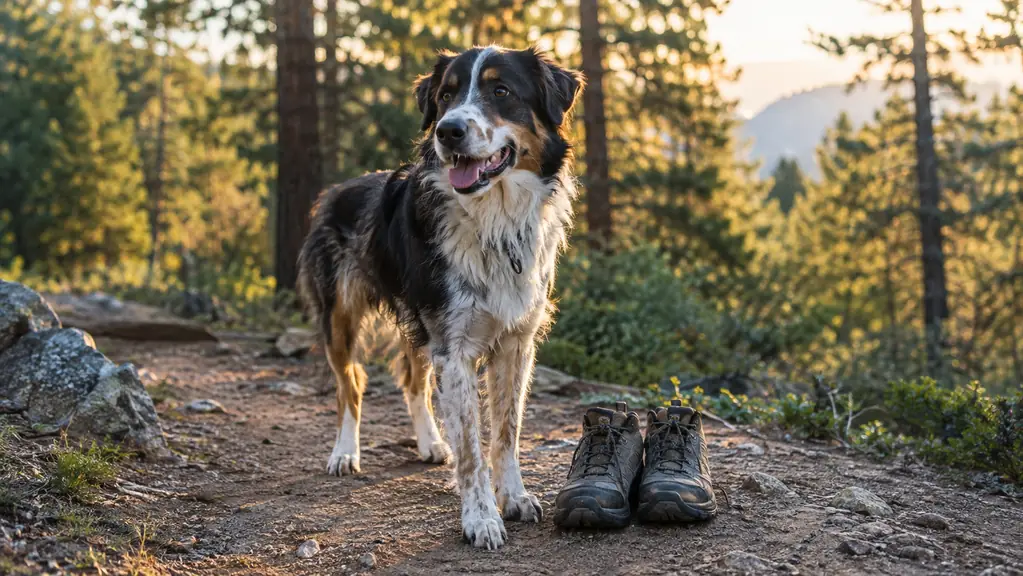
It is also for the person who walks with a dog. Juniper pulls when she sees deer, and the stable heel and grippy outsole have kept me on my feet more than once. I do not think of the Moab 3 as a dog-walking shoe, but it has turned out to be a very good one.
Who Should Skip It
Skip the Merrell Moab 3 if you walk in a hot climate and your feet run warm, because the waterproof version will feel stuffy. Skip it if you want a shoe that is ready for a big hike straight out of the box, because it needs a break-in week. Skip it if you need serious ankle support for rough terrain, because this is a mid-height shoe, not a boot.
And skip it if you are looking for a lightweight, fast, minimalist shoe. The Moab 3 is not light. It is a sturdy, supportive shoe that weighs what it weighs, and if you want to feel like you are wearing nothing, this is not that shoe. That is not a criticism. It is a description.
The Bottom Line
The Merrell Moab 3 is not a perfect shoe, and I would not trust anyone who says it is. It runs warm, it needs a break-in, and the waterproof membrane is a tradeoff, not a pure win. But it is comfortable, stable, durable, and dependable, and it has made my daily walks easier for eight months. For me, that is what a hiking shoe is supposed to do.
The Merrell Moab 3 has been my daily walking shoe for eight months, and I would buy it again.
If you want a comfortable, stable hiking shoe for everyday miles and easy trails, this is a strong choice. Check today's price on Amazon and see if it fits your feet as well as it fit mine.
Amazon Check Today's Price on Amazon →